
Planning a trip to Switzerland? The Ultimate 7-Day Switzerland Itinerary – Perfect for Any Season helps you see the best of the country without feeling rushed. This trip takes you through a mix of cities and natural scenery.
On this trip, you’ll explore Zurich, enjoy the lake views in Lucerne, and take in the mountain scenery around Interlaken and Zermatt. Train rides are part of the experience, with mountains, valleys, and small towns rolling past the window. The journey ends in Geneva, a peaceful city and a nice place to slow down before heading home.
This itinerary a well suitable for all seasons, whether you visit in summer, winter, spring, or fall.
Disclaimer: This post may contain affiliate links. We may earn a commission if you purchase through these links, at no extra cost to you.
Table of Contents
ToggleWhere to Start a Switzerland Itinerary
The best place to start this 7-day Switzerland itinerary is Zurich. It was one of the country’s main international airports, Zurich Airport (ZRH), which offers many direct flight options from around the world. Arriving here is simple, and the city’s strong rail network makes it easy to continue to other major destinations in Switzerland.
The best way to get around is by using trains and cable cars. The routes between cities and mountain areas are scenic and easy to follow, making travel from one station to another simple and stress-free throughout the trip.
If your flight to Zurich is delayed or cancelled, AirHelp helps you claim the compensation you may be entitled to without dealing with the airline yourself.
7-day Switzerland itinerary from Zurich
Day 1: Arrive in Zurich & Explore the City
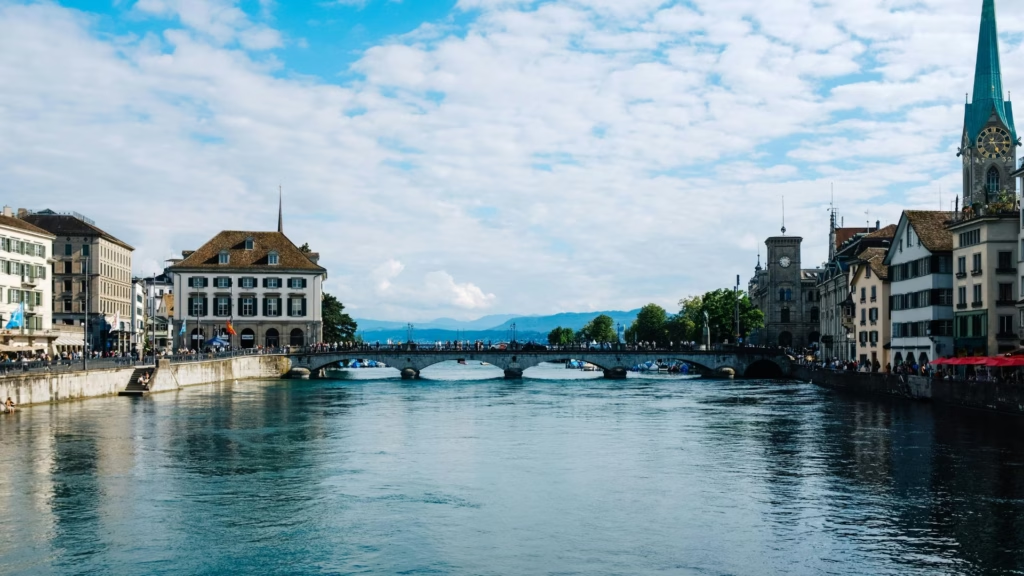
Your 7-day Switzerland trip begins in Zurich, the country’s largest city and main arrival point for international travelers. After landing, take a quick 10 to 15-minute train ride into the city center and check into your hotel. Once you’re settled, head out to explore Zurich’s Old Town, also known as the Altstadt.
Spend the afternoon walking through Zurich’s Old Town. The medieval buildings, narrow streets, and quiet courtyards make it feel like stepping back in time. If you enjoy history, this area is a must.
You can easily spend about two hours here, stopping at small cafés and admiring landmarks like the historic Grossmünster church.
After exploring the Old Town, head to Lake Zurich. Walk along the lake, and it’s a great spot to grab a snack and sit by the water while enjoying the views. If you have extra time, a short boat ride gives you a nice view of the city from the lake.
Night Stay: Zurich
Day 2: Lucerne Old Town & Lake Views
Today it’s time to travel to Lucerne, a small but wonderful city in Switzerland. It’s a place people often remember for its old town, the lake next to the city, and the mountains around it. Travelling from Zurich is easy. The train ride takes about 45 to 50 minutes, and since trains run often, you don’t need to plan it too tightly.
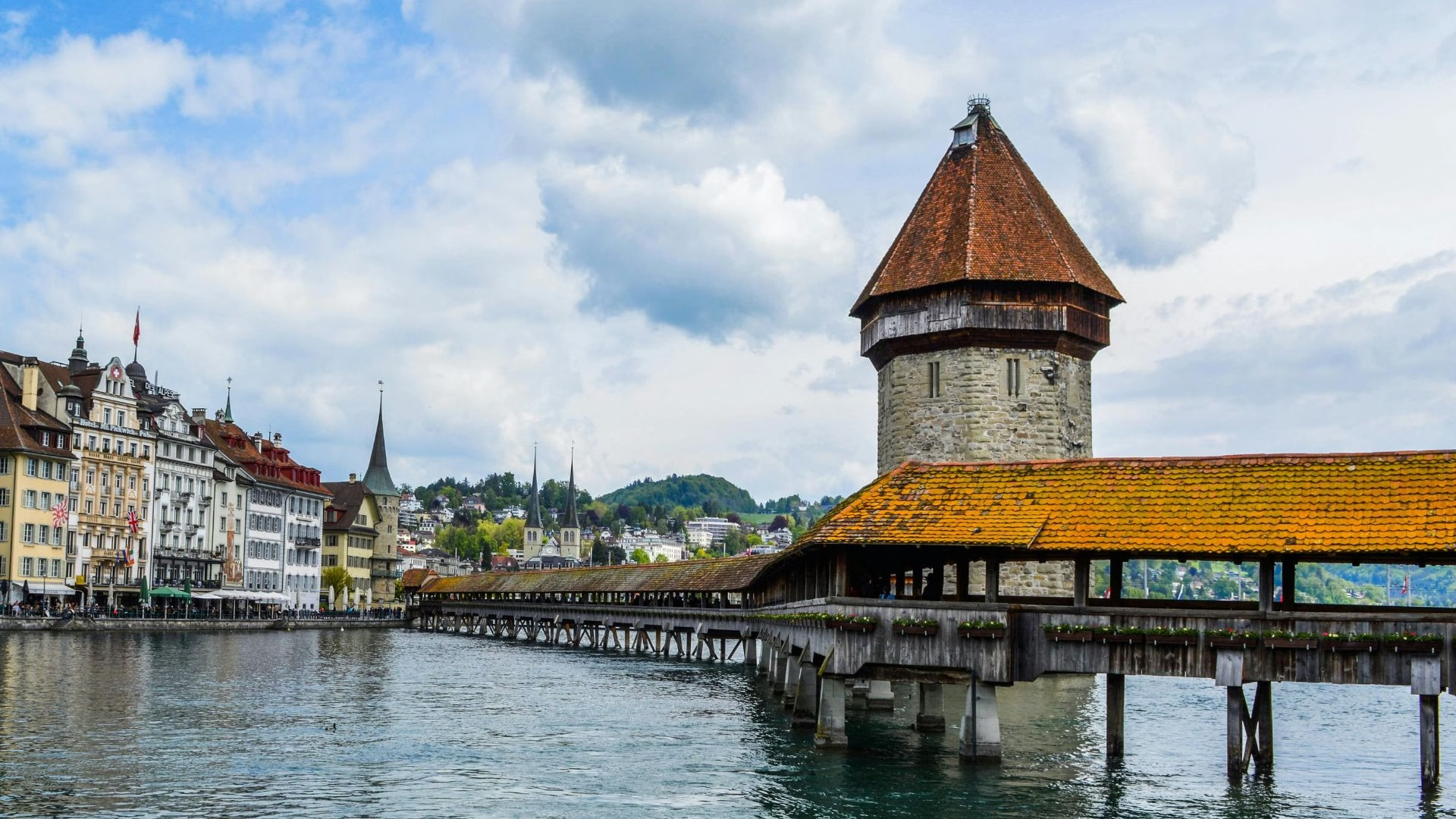
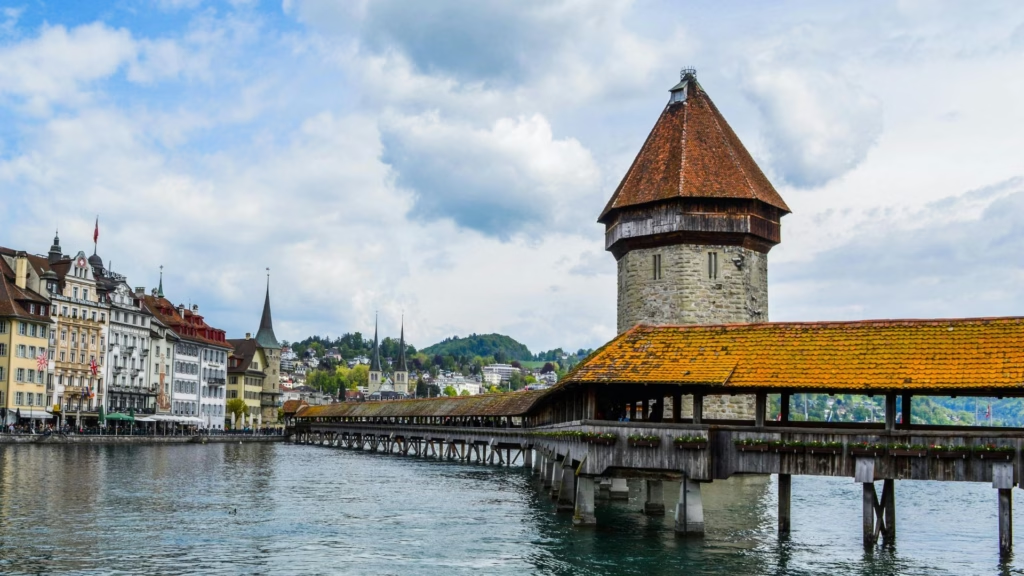
Once you arrive in Lucerne, start your day by strolling through the Old Town. A good first stop is the Kapellbrücke, also known as the Chapel Bridge. It’s the most famous sight in the city and sits just a short walk from the main train station, so it’s very easy to reach.
The bridge is a wooden walking bridge that crosses the Reuss River. It’s decorated with flowers and has old paintings inside that tell stories from the city’s past. This is one of the best spots in Lucerne for photos, so it can get a little busy, but it’s still worth seeing. Walking across the bridge is free and only takes a few minutes.
Just next to the Chapel Bridge, make sure to stop by the Water Tower, known locally as the Wasserturm. It’s one of the most photographed landmarks in Lucerne and hard to miss.
After spending time in Lucerne’s Old Town, make your way to the Lion Monument. It’s a quiet and moving place, and unlike anything else you’ll see in the city.
The monument shows a lion carved directly into a rock wall, created to honor the Swiss Guards who lost their lives during the French Revolution.There’s a small pond and garden around it, which adds to the peaceful feel.
In the afternoon, Lucerne really starts to feel lively, and there are a few nice ways to spend your time. You can take a relaxed boat ride on Lake Lucerne, stop somewhere for a drink or a small snack, or simply walk along the lakeside promenade and enjoy the views.
Night Stay: Lucerne
Day 3: Interlaken – Gateway to the Swiss Alps
After breakfast, head to Interlaken by train. The journey takes about two hours and is considered one of the most scenic train rides in Switzerland. Try to leave Lucerne as early as you can to enjoy the morning views along the way.
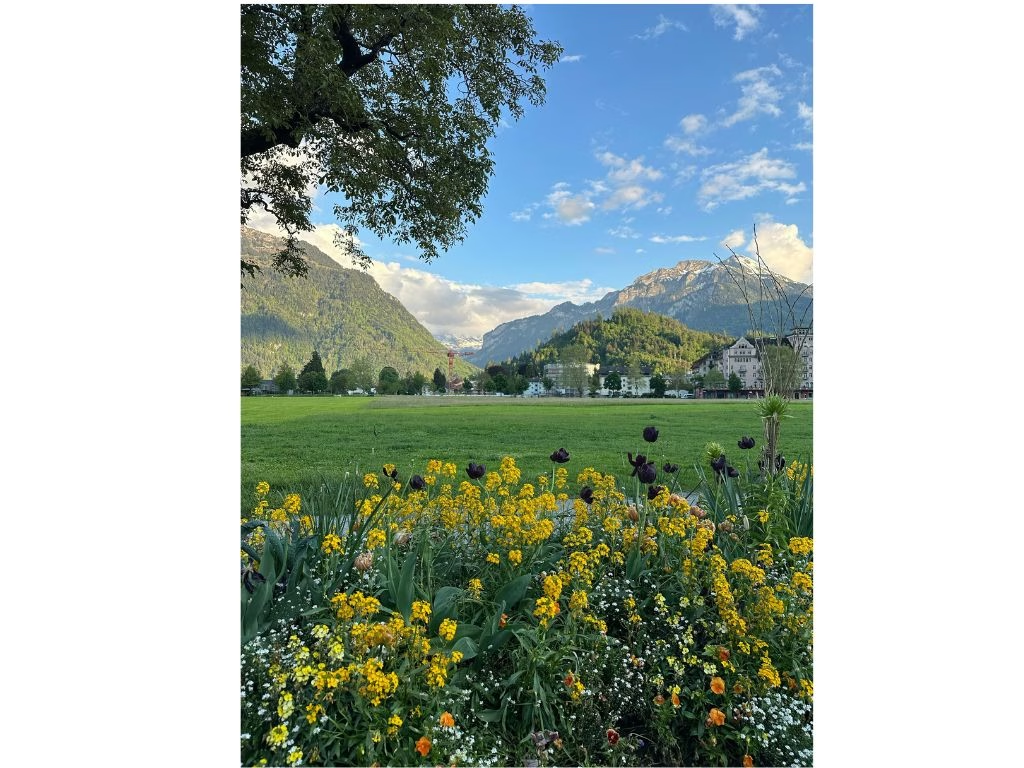
Interlaken sits between Lake Thun and Lake Brienz and is known as the gateway to some of Switzerland’s most dramatic mountain scenery. Today is all about taking it slow, enjoying the town, and visiting a few nearby viewpoints without feeling rushed.
Start your time in Interlaken with a walk through Höhematte Park. This wide, green open space sits right in the heart of town and offers beautiful views of the surrounding Jungfrau mountains. It’s a nice place to slow down, take photos, or simply enjoy the scenery.
The park is easy to find and runs along the main street between Interlaken’s two train stations, Interlaken Ost and Interlaken West, so you’ll likely pass through it naturally while exploring the town.
Spend some time browsing the shops and cafés around Interlaken Ost and Interlaken West, then decide if you want to visit Harder Kulm. This stop is optional, but it’s one of the best viewpoints in the area.
Plan some time for a boat ride on either Lake Brienz or Lake Thun. Interlaken located right between these two beautiful lakes, and being on the water is one of the best ways to enjoy the area.
Night Stay: Interlaken
Days 4 & 5: Zermatt – Matterhorn Views & Alpine Adventures
Today you’ll leave Interlaken and travel to Zermatt by train, with the journey taking around 2.5 to 3 hours. The route goes through Spiez and Visp and is very scenic, so you’ll enjoy the beautiful views along the way.
Zermatt is one of Switzerland’s most famous mountain towns. You’re going to spend two full days here, you’ll have plenty of time to enjoy views of the Matterhorn, ride the mountain railways, and explore the charm of this car-free village without feeling rushed.
First day
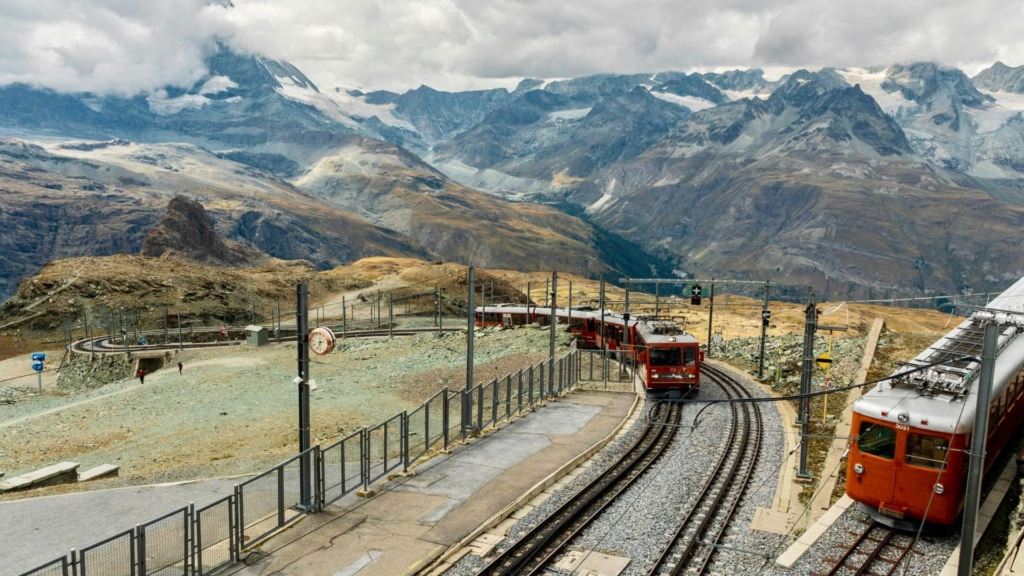
After you’ve checked in and had a short break, head out for one of Zermatt’s most well-known experiences, the Gornergrat Railway.
This mountain train starts right from the Zermatt village and is the easiest way to reach the Gornergrat viewpoint. You will glide upward for about 33 minutes, rising above the treeline to reveal alpine meadows and sharp mountain peaks.
For the best views of the Matterhorn during the ride, try to sit on the right side of the train. Trains run often, usually every 24 minutes during the busy season.
One stop before the summit, get off at Rotenboden. From here, it’s about a 10-minute walk to Lake Riffelsee, where you can sometimes see a perfect reflection of the Matterhorn in the water.
If the weather is clear and you still have energy, you can hike down from the summit to Riffelberg instead of taking the train back. This trail is well marked and offers wide mountain views, summer wildflowers, and constant views of the Matterhorn.
The hike is around 4.5 kilometers long and takes about one and a half to two hours at a steady pace.
In the evening, take some time to enjoy Zermatt itself, especially its food scene. For a small mountain town, Zermatt has some of the best dining options in Switzerland. If you haven’t tried it yet, don’t miss local favorites like raclette or fondue, which are both classic Swiss dishes and taste even better in the mountains.
Second Day
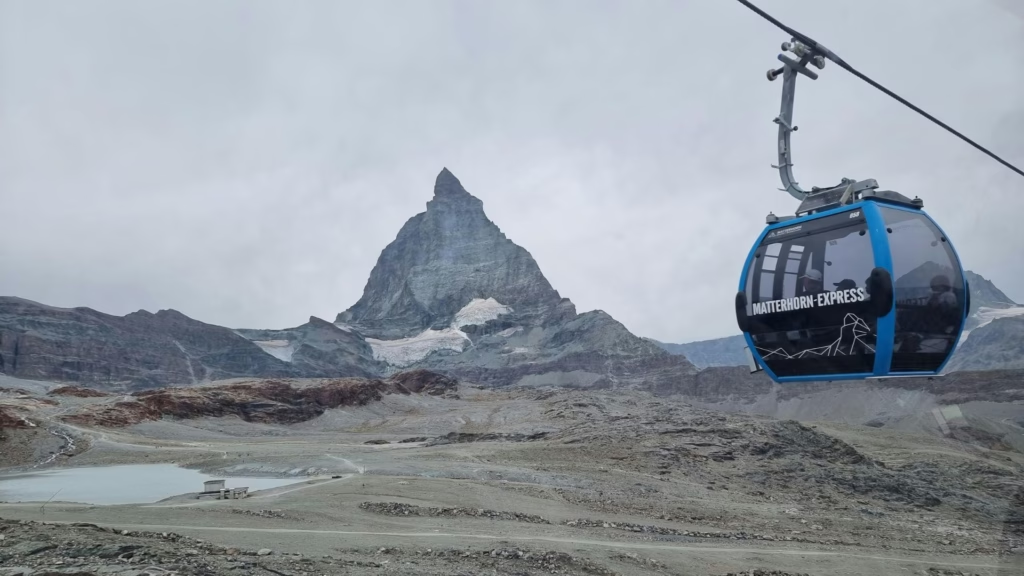
Start your second day in Zermatt with one of the most memorable experiences in the area. Take the cable car up to Matterhorn Glacier Paradise and enjoy the ride as the views slowly open up around you.
The cable car ride from Zermatt to Matterhorn Glacier Paradise, located on the Klein Matterhorn, is an experience in itself and easily one of the trip’s highlights.
Matterhorn Glacier Paradise is the highest cable car station in Europe, sitting at an altitude of about 3,883 meters. Reaching the top feels special, and the views only get better as you ascend higher.
The journey is done in a few stages rather than one long ride. First, you take the Matterhorn Express gondola from Zermatt up to Furi. From there, another gondola continues to Trockener Steg at around 2,939 meters.
For a more scenic route, especially on the way back down, you can choose the gondola that goes between Furi and Trockener Steg via Schwarzsee, which offers beautiful views along the way.
From Trockener Steg, the final cable car takes you up to Matterhorn Glacier Paradise. As you climb higher, you’ll see wide stretches of glaciers and sharp mountain peaks in the distance. It’s one of those moments where you’ll want to slow down, look around, and take it all in.
In the afternoon, slow things down and spend some time exploring Zermatt itself. After that, consider visiting the Matterhorn Museum to learn more about the history of mountaineering, glaciers, and life in the Zermatt region. If you’re using a Swiss Travel Pass, entry to the museum is free.
Later in the day, or toward the evening, take a walk to one of the best viewpoints in town, often called the Zermatt Matterhorn Viewpoint. It’s a great spot to take photos of the village with the Matterhorn rising in the background, especially as the light starts to soften.
Night Stay: Zermatt
Day 6: Explore Montreux and the Shores of Lake Geneva
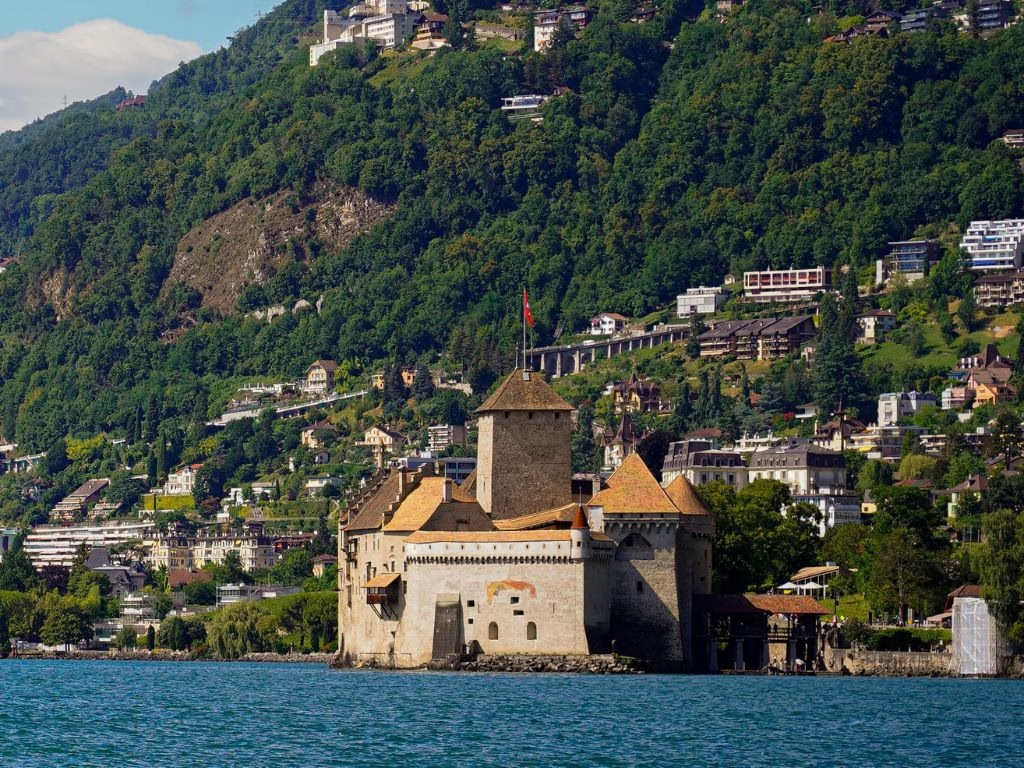
Today you leave Zermatt and take the train to Montreux. The trip takes about two and a half hours, and the views along the way are really nice, with valleys, vineyards, and bits of the lake.
Start your day with a relaxed walk along the Montreux Promenade, one of the prettiest lakeside walks in Switzerland. It’s only about a two-minute walk from the train station, so it’s very easy to reach.
The Montreux Promenade, also known as Quai des Fleurs, really feels like the heart of the town. Walking here is a lovely experience, with colorful flowers lining the path and Lake Geneva right beside you. Add in the clear water and the mountains rising in the background, and it perfectly captures what makes Montreux so special.
After spending time on the Montreux Promenade, make your way to Château de Chillon. It’s about a 30 to 45 minute walk from town, or you can get there even faster by boat. The walk itself is very scenic, with the lake beside you most of the way.
In the evening, enjoy dinner by the lake. The sun slowly sets over Lake Geneva. It’s quiet, calm, and a good way to end the day.
Night Stay: Montreux
Day 7: Explore Geneva Before Departure
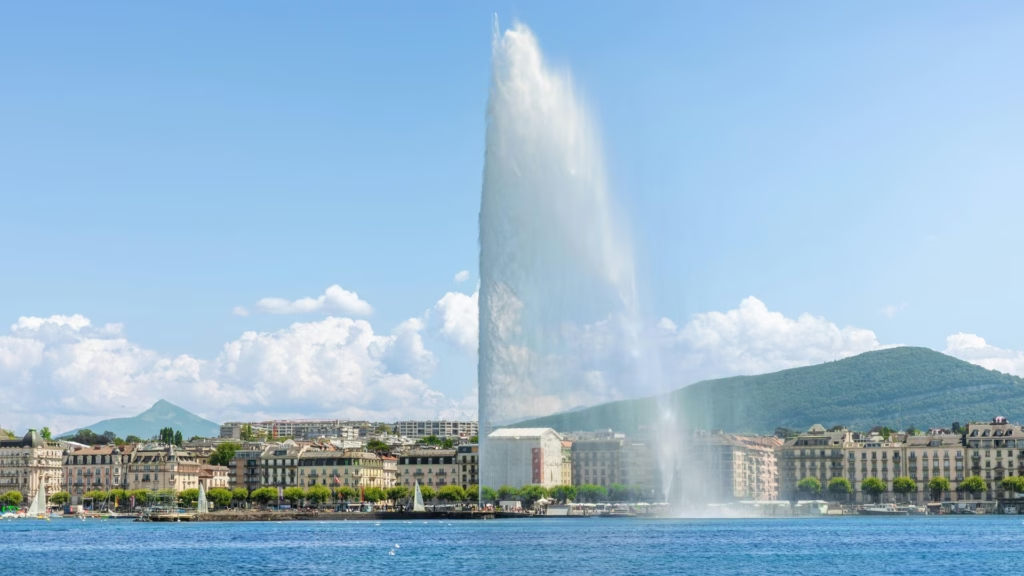
Your final day in Switzerland is spent in Geneva. The city sits along Lake Geneva, with the Alps in the background. The train ride from Montreux to Geneva takes about one hour.
Start your day by the lake. Lake Geneva is a great place for a quiet walk, and it’s only a few minutes from the city center. If you want to spend more time on the water, you can also take a short boat ride and enjoy the views.
While walking around the lake, you’ll come across the Jet d’Eau. It’s one of Geneva’s most well-known sights.
The water jet was first installed back in 1886 as part of the city’s water system. Over time, it became a symbol of Geneva and was moved to its current spot in the lake. Today, it shoots water about 140 metres into the air and can be seen from many parts of the city.
Spend some time exploring the Jardin Anglais, also known as the English Garden. It’s a pleasant place with lots of shade, and both locals and visitors come here to relax.
As you walk through the garden, you’ll see the Flower Clock, or Horloge Fleurie. It’s one of Geneva’s best-known sights, just as popular as the Jet d’Eau, and a spot where many people stop to take photos.
Spend some time exploring Geneva’s Old Town, then enjoy lunch either there or near the lake. When it’s time to leave, getting to Geneva Airport is easy. The train from the city center takes about seven minutes, and trains run often throughout the day, so you don’t need to rush.
Where to Stay
These hotel recommendations are based on my top picks for this itinerary. I chose them to help you reduce travel time each day and stay comfortable, with options for every budget from good value stays to more luxurious hotels.
Top Hotel Recommendations
1. Zurich
- Budget-Friendly Stay: easyHotel Zürich – Clean, basic, centrally located, excellent value.
- Premium Stay: Mövenpick Hotel Zürich Regensdorf – Modern comfort, free breakfast, easy highway/train access.
- Budget-Friendly Stay: Ameron Luzern Hotel Flora – Great location near Old Town, solid comfort at good rates.
- Premium Stay: Hotel des Balances – Stylish boutique stay on the Reuss River with Old Town views.
3. Interlaken
- Budget-Friendly Stay: Backpackers Villa Sonnenhof– Good value, central, simple & comfortable.
- Premium Stay: Lindner Grand Hotel Beau Rivage – Classic alpine elegance on the Aare River, great service.
4. Zermatt
- Budget-Friendly Stay: Hotel Alphubel – Good location, comfortable rooms, mountain views; excellent base.
- Premium Stay: Hotel Monte Rosa – Historic, high-end hotel in center of town with great Matterhorn views and service.
- Budget-Friendly Stay: Hotel Mona – Clean rooms, located near Lake Geneva
- Premium Stay: Fairmont Le Montreux Palace – Iconic luxury on Lake Geneva with exceptional views and service.
What to plan and book for your Switzerland trip
Flights — Trip.com helps you compare and book flights into Zurich Airport, the easiest international gateway for starting this itinerary.
Trains and scenic transport — Swiss Travel Pass via GetYourGuide lets you travel unlimited on most trains, boats, and buses between Zurich, Lucerne, Interlaken, Zermatt, Montreux, and Geneva.
Hotels — Booking.com helps you find centrally located stays near major train stations, so transfers between cities are simple.
Connectivity — Saily eSIM gives you instant mobile data for checking train schedules, navigation, and tickets during the trip.
Travel insurance — SafetyWing offers medical coverage for unexpected issues during multi-city travel and mountain activities.
Flight delay or cancellation claims — AirHelp can help you request compensation if your Zurich flight is delayed or canceled.
FAQS
1. When is the best time to visit Switzerland?
The best time to visit Switzerland is usually from June to August, when the weather is warm, and the scenery is at its best. However, Switzerland looks different in every season, and each time of year has something special to offer. Summer is great for sightseeing, spring and early summer are quieter, and winter brings snowy landscapes.
2. Is 7 days enough to visit Switzerland?
Many people say you need 10 days for this trip, but you can still enjoy Switzerland in 7 days without rushing by visiting popular cities and famous places like Zurich, Lucerne, Interlaken, Zermatt, Montreux, and Geneva.
3. What is the prettiest city in Switzerland to visit?
Lucerne is often considered one of the prettiest cities in Switzerland. People remember it for its charming old town, the lake right beside the city, and the mountains that surround it.
After wrapping up your Switzerland trip, if you’re looking for more great routes and travel ideas across the USA and Canada, be sure to check out these other itineraries.
To Know More About Switzerland, visit