Banff National Park is one of the oldest and most beautiful national parks in Canada, located in southwestern Alberta. It is known for a subarctic climate, along with stunning glaciers and massive ice fields that shape its dramatic landscapes.
Beginning with the discovery of its natural hot springs, this national park has long been a hidden gem nestled within Canada’s scenic beauty. Located in the heart of the Canadian Rocky Mountains, it is recognized as a UNESCO World Heritage Site.
Day 2: Emerald Lake,Lake Louise
Your Day 2 adventure begins with a visit to Emerald Lake in Yoho National Park.
After enjoying your morning coffee and breakfast, start the drive from Canmore to reaching Emerald Lake takes about 1 hour and 15 minutes. After exploring Emerald Lake, drive about 30 minutes to reach Lake Louise.
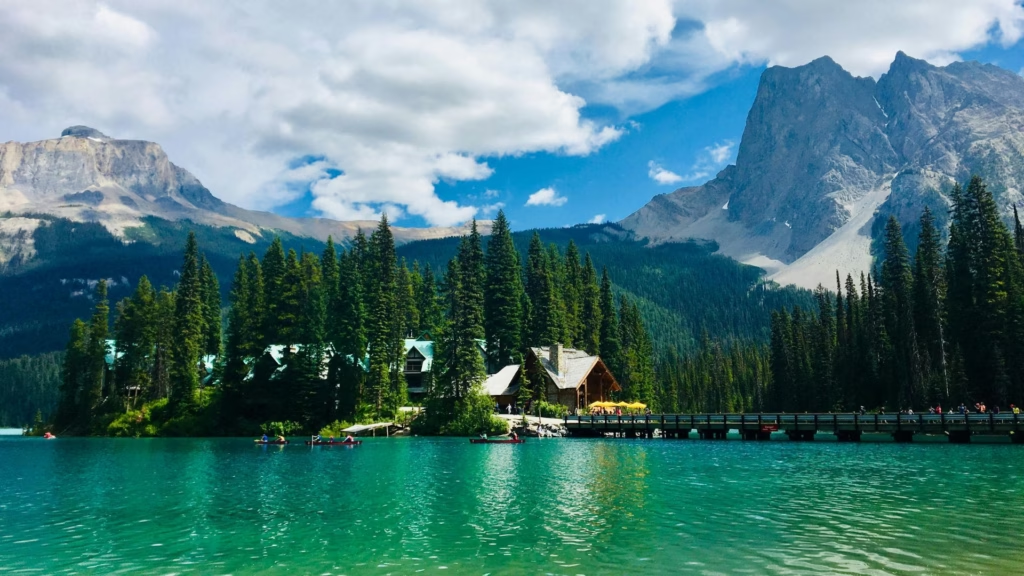
Emerald Lake

Emerald Lake in Yoho National Park is one of the most peaceful and beautiful lakes in Canada. With its striking green waters and peaceful surroundings, dramatic mountains, it’s a must-visit for anyone exploring the Banff and Yoho areas and its also one the largest lake in Yoho National Park.
Visitors can enjoy Emerald Lake in many ways, but the most loved experiences are walking the peaceful shoreline trail or gliding across the water in a canoe.
Lake Louise
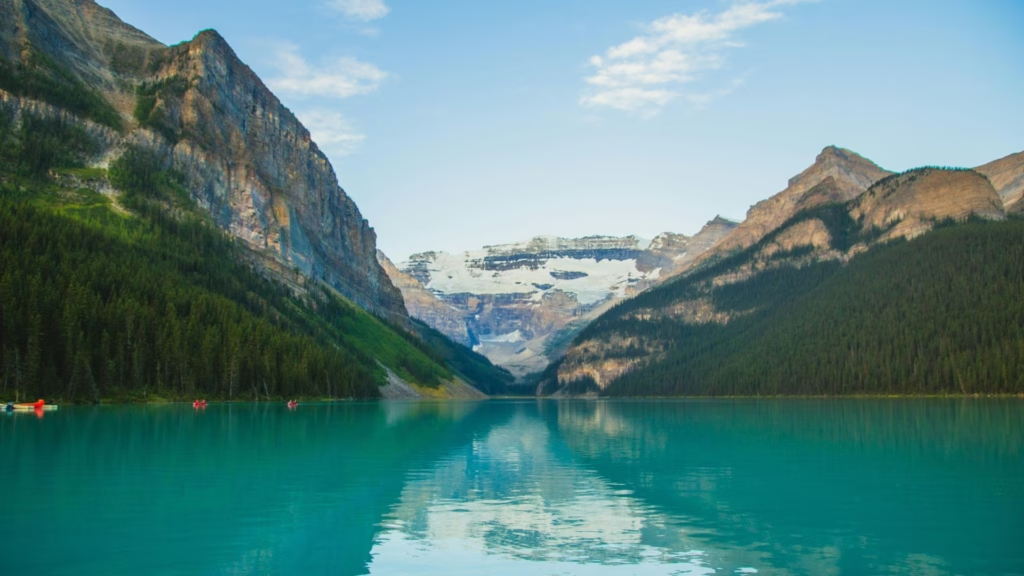
Lake Louise is a small mountain village set deep within the magnificent Rocky Mountains. Surrounded by untouched wilderness and breathtaking scenery, it has everything you’d expect from a true bucket-list destination in Alberta. It’s no surprise that Lake Louise remains one of the favorite places in all of Canada.
At Lake Louise, simply sitting by the waterfront with a warm coffee and soaking up the views of towering peaks, glaciers, and unbelievably blue water is an experience in itself. For something even more magical, rent a canoe and enjoy a calm, scenic paddle across the lake.
If you enjoy hiking, make sure to trek up to the Lake Agnes Tea House. It’s one of the top experiences at Lake Louise and offers stunning scenery throughout the climb.
Night stay: Canmore
Day 3: Bow Lake, Peyto Lake, Icefields Parkway Drive to Jasper
Good morning! Day 3 involves a lot of driving, so an early start is essential. Leave Canmore and drive about 1 hour and 25 minutes to reach Bow Lake. After taking in its beauty, continue toward Peyto Lake before finally heading up the breathtaking Icefields Parkway toward Jasper.
Bow Lake
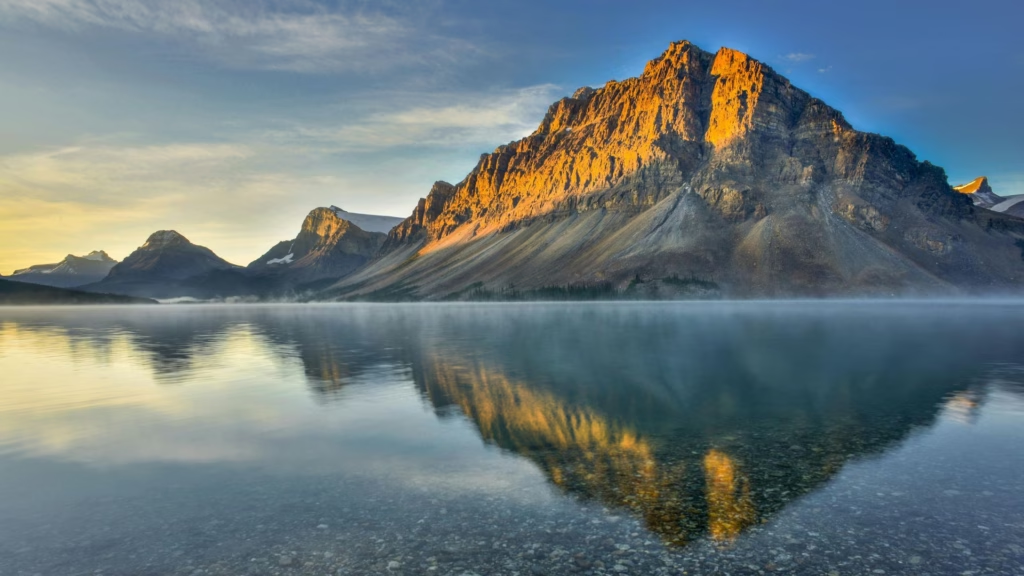
Bow Lake is an incredibly beautiful glacier-fed lake in Banff National Park, situated along the scenic Icefields Parkway. Its vivid blue color comes from the Crowfoot Glacier, and the lake is the headwaters of the Bow River which is the same river that winds through downtown Banff.
A must-do at Bow Lake is walking along the lakeshore. Some sections can be reached directly from the parking area, and much of the shoreline is framed by rugged mountain walls, making it incredibly scenic.
This lake is a true paradise for photographers—the brilliant blue color that lasts all summer and the towering peaks surrounding the shoreline create some of the most spectacular photo opportunities in the Canadian Rockies.
Bow Lake is perfect for those who enjoy paddleboarding, canoeing, or kayaking. There are no rental shops at the lake so you need to bring your own equipment or pick up a rental in Banff or Canmore before you head out.
Peyto Lake
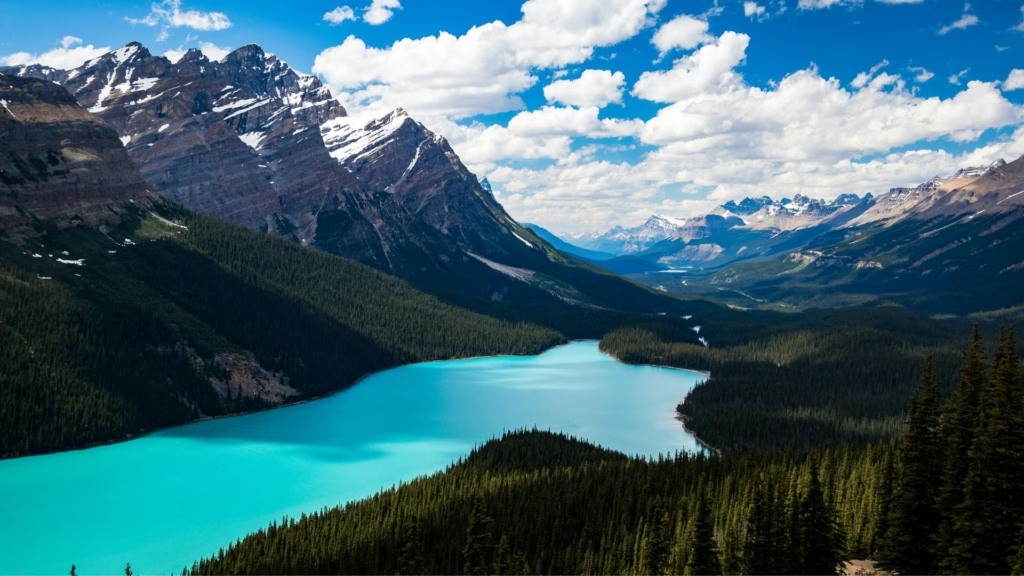
Peyto Lake is one of Banff National Park’s most stunning sights, known for its bright blue water and incredible lookout views. It’s easily one of the most photographed and admired lakes in the Canadian Rockies.
At Peyto Lake, the highlight is the breathtaking viewpoint overlooking the vivid turquoise water and dramatic landscape. Photographers should aim for golden hour in the early morning or late evening, when the light is perfect and the crowds are minimal.
You won’t need a long visit at Peyto Lake. Just head to the viewing platform, admire the spectacular scenery, snap a few photos, and then move on to your next stop along the Icefields Parkway.
Icefields Parkway
Next, your Banff itinerary leads you to Jasper National Park—and staying overnight is definitely worth it. The journey takes you along the Icefields Parkway, a remarkably scenic drive known for its sweeping curves, towering peaks, and unforgettable mountain views.
Night stay: Jasper
While the Icefields Parkway drive is free you cannot safely walk on the Athabasca Glacier on your own. Booking the
Columbia Icefield Adventure and Skywalk ticket is the only way to step onto the glacier using a special Ice Explorer vehicle and access the glass Skywalk without long waits.
Day 4: Maligne Lake, Spirit Island,
Begin your day with a 45–50 minute drive from Jasper to Maligne Lake. After exploring, take the boat cruise to Spirit Island—the only way to reach this iconic spot.
Maligne Lake
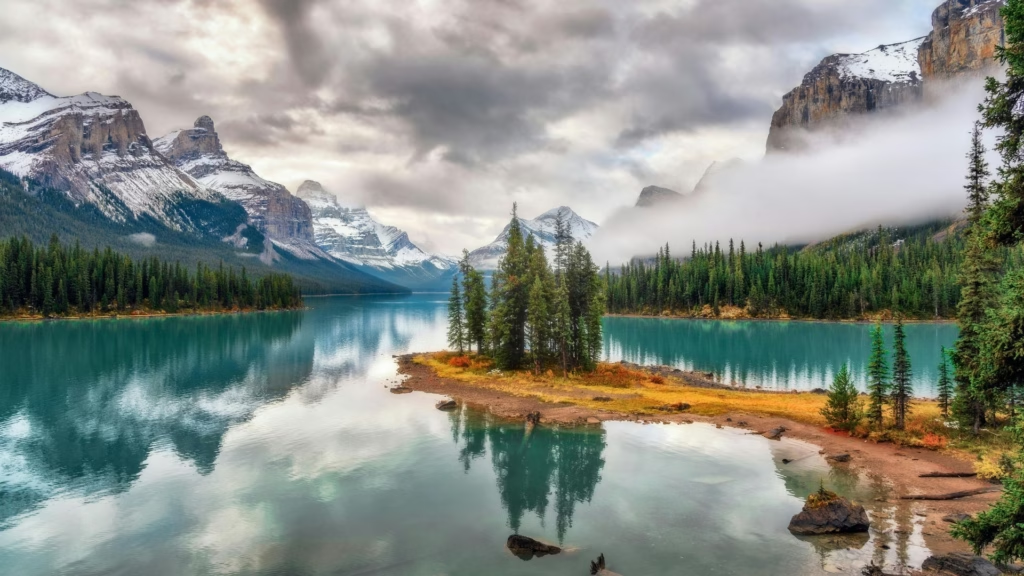
Maligne Lake is a glacier-fed lake in Jasper National Park, surrounded by towering mountain peaks, wildlife, and shimmering glaciers. It’s also home to Spirit Island—a sacred place for the Nakoda Indigenous people and the most photographed spot in all of Jasper.
There are plenty of activities to enjoy around Maligne Lake throughout the year. In summer, visitors can hike, canoe, fish, or join a scenic boat tour.
Although the brilliant blue water looks tempting, the glacier-fed lake stays cold all year, making swimming difficult. In winter, the area transforms into a beautiful spot for cross-country skiing.
Spirit Island
Spirit Island is a peaceful peninsula in Jasper National Park. After Peter Gale’s photograph was featured in Kodak’s Colorama display in 1960, it became one of the most photographed places in the Canadian Rockies.
Spirit Island lies 14 km from the Maligne Lake Boathouse, making it one of Jasper’s hardest places to reach. There’s no driving or hiking to it—your only options are paddling yourself or taking a boat tour.
Night stay: Jasper
Spirit Island cannot be reached by road or hiking trail and is located 14 km across Maligne Lake. For most travelers the only practical way to see it is by booking the
Maligne Lake Cruise, which takes you directly to the island while sharing its cultural and historical significance.
Day 5: Kananaskis
Today, you’ll leave Jasper and begin your journey back to your starting point at Calgary Airport. Along the way, you’ll explore Kananaskis—a region known for its beautiful lakes, waterfalls, and scenic hiking trails.
Kananaskis Country is a vast collection of parks and public lands located just west of Calgary, in the foothills of the Canadian Rockies. Spanning more than 4,000 square kilometres nearly double the size of Banff National Park it includes provincial parks, recreation areas, and untouched wilderness zones.
Here, you’ll find everything from high-alpine hiking trails to quiet lakeside picnic spots, all with far fewer crowds than the more famous parks.
Where to Stay
During this trip, you’ll stay in Canmore on Day 1 and Day 2 instead of inside Banff National Park. Staying inside the park is more expensive, and rooms are extremely limited, so you’d need to book very early.
Canmore on the other hand, is more affordable, less crowded, and offers easy access to almost all the places included in this itinerary.
For Day 3 and Day 4, you’ll stay in Jasper, as it’s the most convenient base for exploring all the locations planned for those days.
Top Hotel Recommendations in canmore
Top Hotel Recommendations in Jasper
Best Time to Visit
The best times to visit Banff are from June to August and December to March. Summer is perfect for nature lovers, with warm weather and generally reasonable hotel prices. Skiers, on the other hand, will want to come during the peak of winter. Depending on what you’re planning to do, Banff is almost a year-round destination.
WHAT TO PLAN AND BOOK FOR YOUR BANFF TRIP
Flights – Trip.com helps you compare and book flights to Calgary, the main gateway to Banff National Park.
Car rental – DiscoverCars makes it easy to rent a car from Calgary Airport so you can explore Banff, Lake Louise, Jasper, and the Icefields Parkway at your own pace.
Hotels – Booking.com helps you find and book hotels and lodges in Canmore and Jasper, with more availability and better value than staying inside the park.
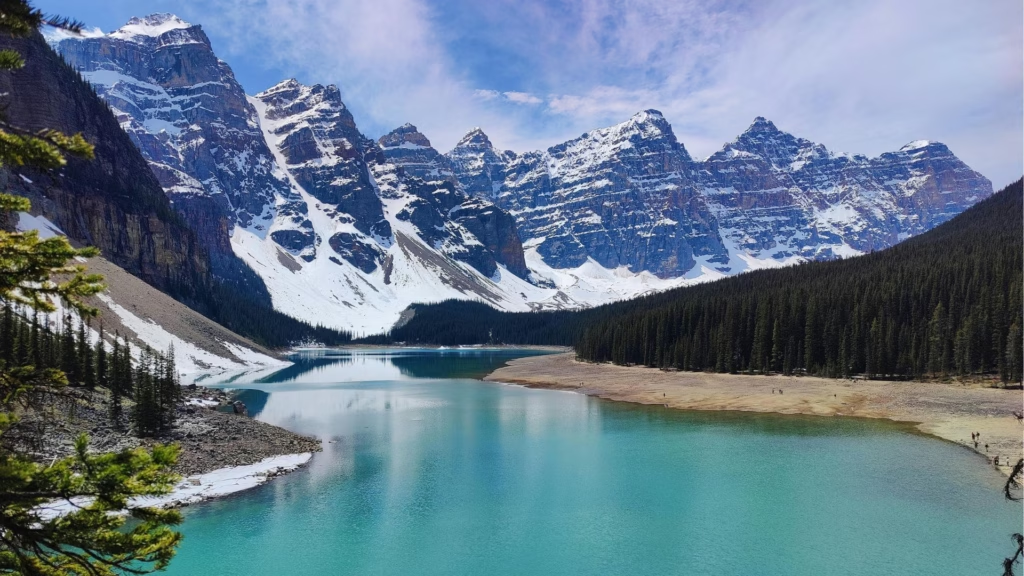
Tours – Viator is useful for booking guided experiences like Moraine Lake access, the Icefields Parkway tour, and the Spirit Island cruise where entry is restricted.
Connectivity – Saily helps you stay connected for maps and navigation in remote mountain areas with limited mobile coverage.
Insurance – SafetyWing offers travel medical insurance for peace of mind during hikes, wildlife areas, and long drives.
FAQS:
1. Is 5 days enough for Banff?
Most visitors spend about a week in Banff, though some stay just three days. Five days is a great amount of time to enjoy the highlights of the Canadian Rockies.
2. Which is nicer, Lake Louise or Banff?
Banff gives you town energy, and Lake Louise gives you peaceful nature. Visiting both is the best way to experience the Rockies, but where as Lake Louise offering some of the most stunning views in all of Canada.
3. What is the best way to explore the Banff town and National Park?
Banff is easy to explore on foot, and renting a car makes visiting nearby spots simple. There are also buses running between Calgary and Banff for added convenience.
Conclusion:
By this article, The Ultimate Banff Itinerary-Complete Travel Guide,
I hope this guide makes planning your Banff National Park adventure a little easier, and that it inspires you to discover these incredible places for yourself. Happy exploring!
After exploring the Banff National Park and jasper, why not plan your next adventure in Northern California?Check out our latest
article on 7 Day Northern California Road Trip Itinerary
To know more about Banff visit


1 thought on “The Ultimate Banff Itinerary-Complete Travel Guide”
Comments are closed.